Choosing the Right Land Clearing Methods for Your Property
Key Takeaways:
There are different land clearing methods and techniques that can be used to solve different land problems.
Some properties can benefit from multiple styles of land clearing, especially if they’re spread out with varying terrain.
Getting a professional assessment is the best way to determine which land clearing process will work best for your land.
It's pretty easy to know when your property needs clearing. The hard part is knowing what kind of clearing it needs.
A pasture with good soil that's used for grazing is going to require a different approach than a brush-covered lot that needs to be dozed over to prepare for a new residential development. Clearing property isn't a blanket job, which is why it's so important to understand the different kinds of land clearing methods and techniques before you hire a crew for the job.
Start By Looking at Your Property Goals
Before choosing a land clearing method, look at what you need from the land once the work is complete.
Ranch land probably needs pasture edges opened up and fence rows cleared. Hunting land may need better trails and access to food plots with enough cover left in place for wildlife to travel under. A commercial development that needs a large concrete pad laid will likely require complete removal of stumps, trees, and anything else getting in the way of construction equipment.
When clearing property, different parts of the same place may call for different work. Just because you need to scrape the land to put down a concrete pad doesn't mean you'll need to do the same thing near the back edge of the property where the pond is.
Before choosing a land clearing method, look at:
What needs to stay
What needs to come out
How the land will be used
How equipment can reach the work area
How clean the finished site needs to be
With a first look, a good crew can typically tell what kind of land clearing process will work best
The Most Common Land Clearing Methods
Forestry Mulching
Best for:
Overgrown trails and access paths
Fence lines
Edges of pasture
Food plot edges
Hunting lanes
Brushy wooded acreage
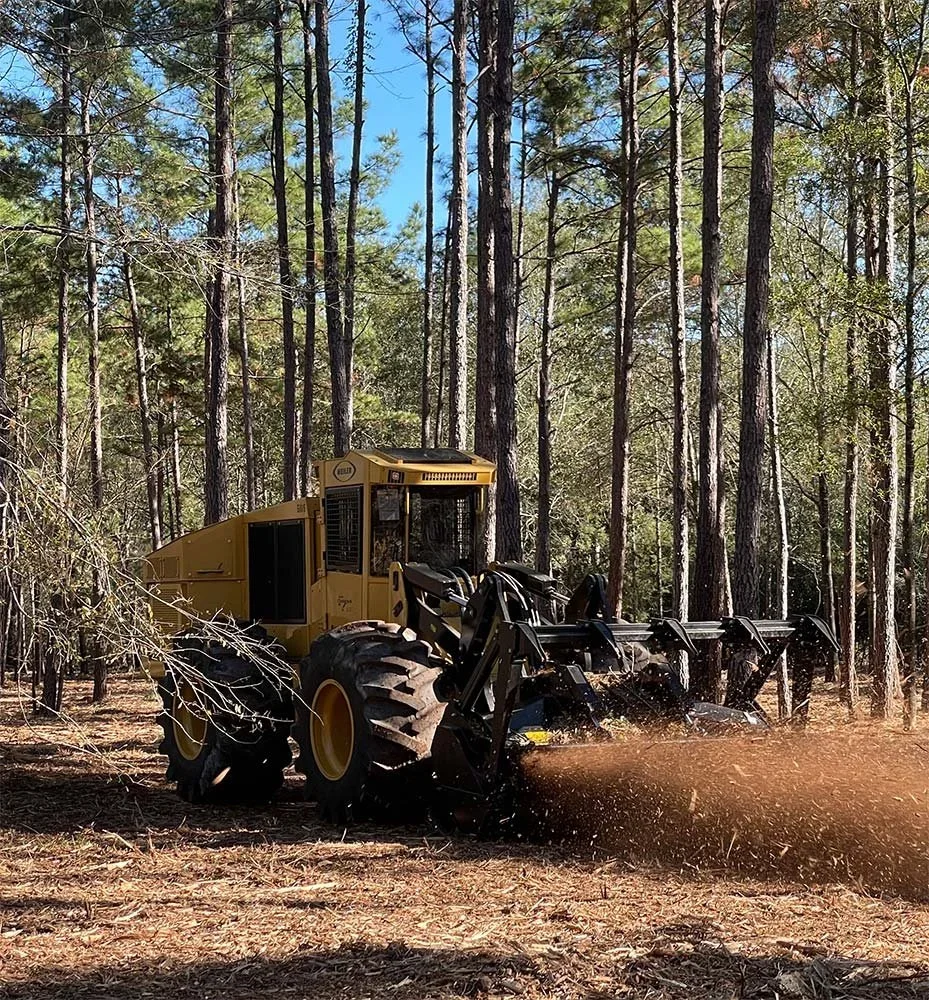
Forestry mulching is one of the best land clearing methods when you need to get rid of brush, but you don't want to scrape the land down completely. A forestry mulcher is meant to cut and grind brush, saplings, and other unwanted growth in place so that the shredded material is left on the ground to cover the topsoil.
The leftover mulch is one of the reasons many landowners use this method. For starters, it makes the job quicker because there aren't piles of debris to haul off after the fact. It also protects healthy soil by returning that organic matter to the ground.
Grubbing
Best for:
Building pads and shop sites
Road entrances
Gate access
Utility corridors
Stump-heavy sections
Grubbing is a heavier-duty land clearing process. This method is typically used when you need to get rid of a problem below the surface, such as roots or buried organic material that might still be there after brush has been cleared.
If you're prepping for homesite development or building a new road for equipment to drive on, you don't want roots to eventually pop back up.
Tree and Stump Removal
Best for:
Getting rid of dead, damaged, or unwanted trees
Trees blocking access lanes
Future homesites, shops, or work areas
Tree and stump removal is more targeted than broad clearing. Sometimes you don't need to open a whole property up. One dead tree may be leaning over a work area or blocking a future driveway.
The big benefit with this land clearing method is that you preserve the surrounding land that doesn’t need to be cleared for access or development.
Underbrush Clearing
Best for:
Clearing paths for grazing or development
Eliminating fire risk
Increasing property value
Reducing erosion
Creating space for recreation
Underbrush clearing can be used when brush is overgrown and taking over necessary space. This land clearing method can be used for a number of things, from creating paths for wildlife to travel through to beautifying an old property to prep for future development.
Brush can also be a major fire hazard and attract pests if it’s left to spread. By clearing it, you make the land healthier and eliminate fire fuels.
Land Clearing Methods Comparison Table
When clearing a property, it's important to match the method to the area you're working on. This table provides a quick way to compare these popular options.
| Method | Best For | Good Fit When | Things to Watch Out For |
|---|---|---|---|
| Forestry mulching | Brush, small trees, trails, fence lines, and wooded acreage | You want to open the land in a sustainable way without stripping it bare | Large trees, heavy stumps, old wiring, buried debris that may need further work |
| Grubbing | Roots, stumps, and buried organic material | You need to eliminate hidden obstacles and create a stable surface for development | This land clearing process disturbs the soil more than most other methods |
| Tree and stump removal | Specific trees, dead trees, hazardous stumps, and blocked access | You need targeted removal | Getting rid of old, deeply-rooted stumps requires a high level of care |
| Underbrush clearing | Briars, saplings, low growth, trails, and visibility | You want better access without removing large trees or canopy | Thick, woody growth may need heavier-duty equipment |
What Can Change the Right Clearing Method
No two properties are the same. Certain components of the land can have a direct impact on the land clearing method you choose.
Vegetation: Light brush, briars, saplings, mesquite, cedar, large trees, and old stumps call for different kinds of work. A mulcher may be able to get through a brush patch, but another section that's in need of tree removal will likely need different equipment altogether.
Terrain: Some machinery needs more room to work. If you’re clearing a creek bottom or a sloped piece of land versus a flat pasture, it can impact the kind of equipment that can be used for the job.
Access: Before the main work begins, gates, narrow lanes, blocked trails, or property entrances may need to be opened up. Sometimes the first part of the job is just being able to get the crew and equipment to the right spot.
Soil and drainage: The land clearing process should account for how and where soil will move or wash away once the vegetation around it is removed.
Future use: A pasture edge, hunting trail, homesite, commercial lot, or pond will need a completely different approach.
Budget: Pricing typically depends on the size of the acreage, the kind of growth and terrain you're dealing with, the equipment needed for the job, the level of access required, and any expectations for cleanup.
When to Get a Professional Assessment
With a professional assessment, you can avoid two major and common mistakes:
Over-clearing: Taking out more trees, cover, or growth than necessary for the property.
Under-clearing: Leaving stumps, roots, heavy brush, or debris in the way of future use.
5K Land Management handles clearing property with in-house equipment and a knowledgeable crew, so you don’t have to wait on a string of subcontractors testing out different machines that may be wrong for the job.
Our skilled team can assess the land, talk through your goals, and match the equipment to the job.
Now that you have a better understanding of the most common land clearing methods and techniques, get in touch with our team to get a custom quote.