Hunting Land Management: Clearing Land Without Ruining the Habitat
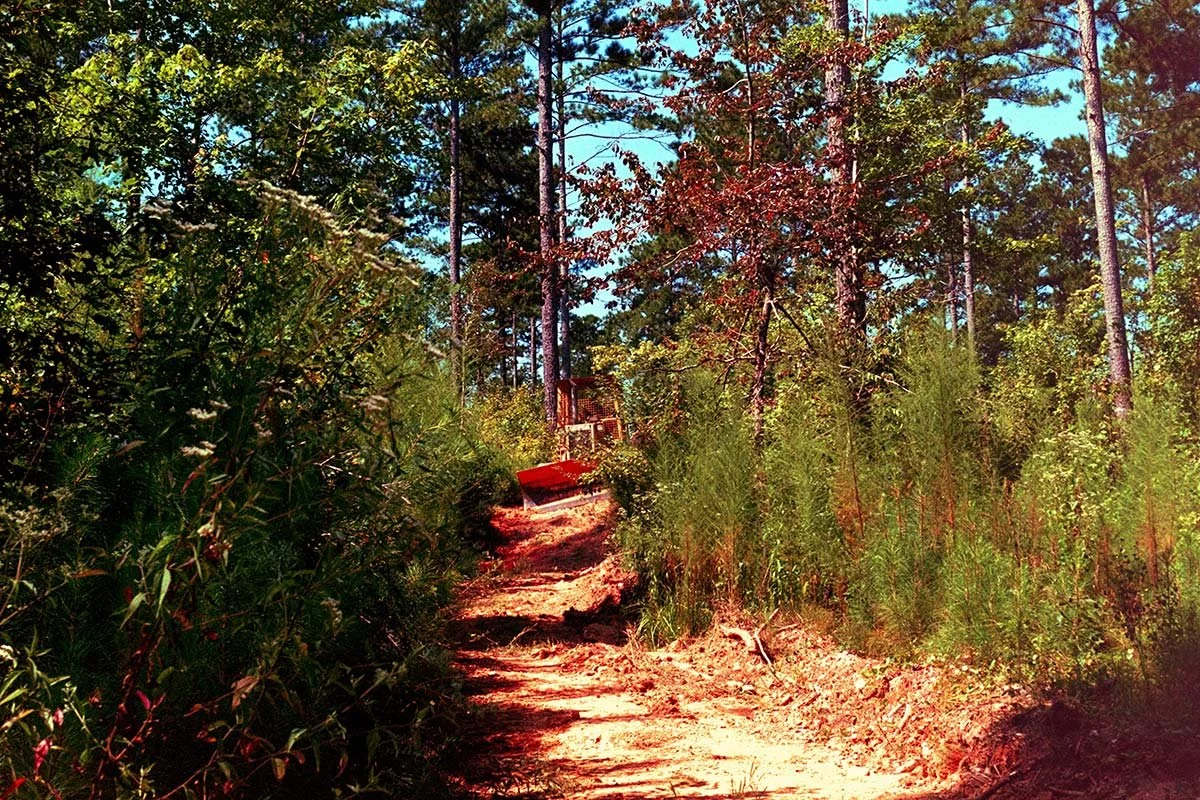
Key Takeaways:
Proper hunting land management is meant to shape a habitat so wildlife has proper food and cover, not to clear the land down to the bare soil.
Selective clearing is one major aspect of wildlife habitat improvement, opening the land up without getting rid of important cover.
Soil conditions and site access both play roles in good food plot land preparation.
People talk about hunting land management like it's mostly about planting food plots.
That’s usually not the problem.
More often, the issue is that the property slowly stops working the way it used to. Trails close up. Cedar spreads across ridges. Mesquite thickens in the draws. A stand that once overlooked a wide crossing ends up buried in brush.
You see it constantly across the Cross Timbers region in Texas and Oklahoma. Land that used to carry good grass and open timber is now a patchwork of cedar thickets and tangled understory.
Once that happens, deer movement changes, or turkeys might stop using certain parts of the property. Hunters can lose access to half the acreage.
Hunting land management is less about aesthetics and more about restoring function.
Follow these hunting property improvement tips and get your land back into shape.
What Habitat “Clearing” Actually Means
Clearing isn't just pushing a bunch of growth out of the way with a dozer. In fact, that approach usually creates more problems than it solves.
Wildlife doesn’t like to live on wide-open land. Deer prefer to bed in thick cover. Turkeys typically nest in areas with different grasses and brush. If you strip all that away, the animals will simply move somewhere else.
Most wildlife habitat improvement projects end up being selective work, such as managing tree density for habitat quality.
Take eastern red cedar, which spreads throughout North Texas and Southern Oklahoma like wildfire. It shades out the grasses and pulls tons of moisture from the soil. If you leave it to grow, it can ruin the entire understory.
By removing cedar, you open sunlight back up to the ground. Native grasses start returning within a season or two. Whitetail begin browsing the new growth almost immediately.
Mesquite behaves differently.
It doesn’t shade as aggressively as cedar, but the root system goes deep and competes hard for water. Clearing mesquite often becomes part of broader hunting land management because the trees crowd out forage and make access difficult.
Then there's clearing land for hunting access.
If a truck or ATV can't reach the back half of a property, it can be hard to manage feeders or water sources.
That kind of access work is common in both Texas wildlife habitat land clearing and Oklahoma hunting land prep projects.
Hunting Land Management Projects That Landowners Request
The requests landowners make usually fall into a few categories.
Shooting Lanes
A stand might overlook a clearing today and be completely blocked two seasons later.
Cedar is typically the culprit. That's why we often work on improving visibility and shooting lanes.
The trick isn't cutting everything. Clearing narrow lanes through the brush keeps the surrounding cover intact while opening sightlines.
Some landowners try to do this with chainsaws and brush cutters. That works for small areas. Once the brush thickens across multiple acres, equipment becomes the practical option.
Trails and Roads
People underestimate how quickly trails can disappear.
We usually give a ranch road two or three seasons without maintenance for saplings to start growing right in the middle of it. Add a few wet years, and vines and briars take over.
Eventually, trucks might stop using that road. At that point, vegetation can start to close in.
That’s where trail and access road clearing come into play. Once the equipment can move across the property again, the rest of the hunting land management work becomes much easier.
Food Plot Land Preparation
Food plots get a lot of attention in hunting culture. Some landowners plant several every year.
But many of those plots struggle because the ground was never prepared properly.
Good food plot land preparation starts with sunlight. If the canopy blocks most of the light, forage crops won't establish well. Clearing trees or thick brush around the edges is typically necessary.
Soil conditions are important too. In parts of North Texas, black clay soil holds water for long periods. Sandy loam soils in Oklahoma behave differently. Adjusting food plot land preparation for those conditions can make a huge difference in how the plot performs.
We’ve seen so many plots fail just because they were planted in shaded areas that never had a chance to grow.
Travel Corridors
Whitetail rarely move randomly across a property. They like to follow patterns, moving from bedding areas to feeding areas or ridge lines to water sources.
When the brush becomes too dense, these movement paths disappear.
Selective clearing can help guide animals back into predictable routes. We call this brush management for wildlife corridors. When those routes line up with stand locations, hunters start seeing more consistent activity.
This kind of work also supports habitat creation for deer and turkey, especially when it connects feeding areas with bedding cover.
Reclaiming Neglected Properties
Sometimes a property hasn't been managed for decades.
These hunting land management projects typically involve restoring overgrown hunting acreage where the former pasture has been completely taken over. The goal is to rebuild a healthy mix of grass, brush, and trees, instead of letting a single species dominate.
That balance is what good wildlife habitat improvement aims for.
Safety and Land Stewardship
When you clear the land, you have a big impact on it. This includes the soil structure, the drainage patterns, and the long-term health of the habitat.
If a hillside is cleared in the wrong direction, it can start erosion problems that last for years.
Timing is important as well. Many landowners prefer seasonal habitat clearing during late winter when the ground is firm, and wildlife disturbance is lower.
If you have land with a water source next to it, such as a creek, pond, or seasonal drainage area, you have to be careful about what kind of heavy equipment operates around it. If not, you can damage the area.
All of these factors have to be taken into account when it comes to responsible hunting land management.
Where Landowners Usually Start
Some landowners begin by reopening trails. Others focus on habitat corridors or food plot land preparation. In many cases, the biggest improvements come from small adjustments rather than massive clearing projects.
Landowners looking into hunting land management should spend time learning how different approaches work before bringing equipment onto the property. These approaches can include:
Our Pricing Hub can explain how we typically structure large-acreage hunting land management, wildlife habitat improvement, and food plot land preparation work.
A property doesn't need to be stripped clean to become a better hunting environment. Most of the time, it just needs the right vegetation removed in the right places.
Get in touch with us today to learn more about our land clearing services.
FAQs
-
That depends heavily on vegetation density. Forestry mulching and moderate brush might cover 5 to 15 acres per day. Thick cedar stands can take a lot longer to get through.
-
Not if it's done selectively. Removing invasive brush during hunting land management often increases browse and improves travel corridors, which can increase activity.
-
Late winter is pretty common because vegetation is dormant and soil disturbance tends to be lower. It’s also outside of peak nesting seasons.