Agricultural Land Clearing Methods: A Guide for Ranch and Pasture Landowners
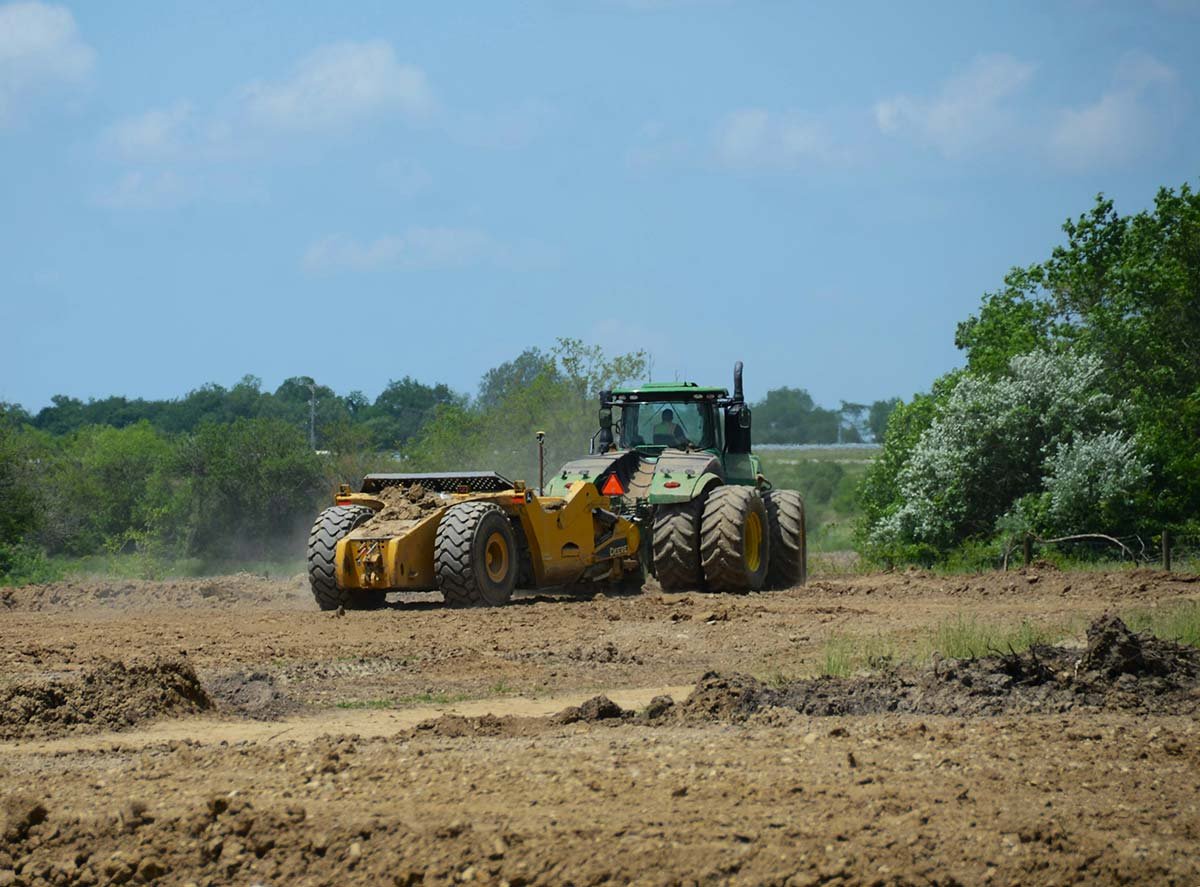
Key Takeaways:
There aren't any “best agricultural land clearing methods.” What you need will depend on the type of brush you're dealing with, the soil, and how you plan to use the land.
Ranch land improvement is just as much about making the land productive as it is about clearing vegetation.
For pasture restoration, we use techniques like brush clearing and address deep root systems.
Different equipment serves different purposes. A dozer can’t do what a mulcher does, and vice versa.
We've spent enough time on ranchland in North Texas to notice certain patterns in the way the land functions.
When pasture is left alone for a few seasons, the land tends to reclaim itself. First, it sends in some light brush. Then, cedar seedlings and mesquite follow close behind. If a landowner were to leave and do nothing with their land for a decade, they’d probably come back and barely recognize the place.
Fence lines are usually the first to disappear. Then, grazing grass thins out. Before long, the cattle are avoiding half the field because it's too thick to move through.
We see it everywhere, which is why we always suggest landowners get to know more about agricultural land clearing methods. Not because they want their land to look good (even though that’s an ancillary benefit), but because they need property that functions.
Proper clearing can put the land back to work, and if you’re serious about ranch land improvement or pasture restoration techniques, this is the place to start.
Common Ranch Land Clearing Goals
Walk through as many ranch properties as we have, and you'll see the same issues popping up over and over again. Brush doesn't just grow randomly. It tends to take over the exact places ranchers rely on most:
Pasture edges
Fence lines
Water sources
Equipment trails
Most landowners use our agricultural land clearing methods for one of a few reasons.
Pasture Is Slowly Disappearing
Cedar and mesquite take up a lot of space. They also drain the soil.
During the dry months, a mature cedar can pull up as much as 30 gallons of water per day. Mesquite can grow its tap root nearly 200 feet down in the ground in a search for water. Grass is no match for that.
Once those trees start spreading, forage production can drop quickly. That’s why clearing projects often focus on clearing cedar and mesquite for pasture health before anything else happens.
Brush clearing is one of the most common pasture restoration techniques for ranchland improvement.
Fences Lines Are Vanishing
You'd be surprised how many ranches have fence lines you can't even see anymore.
Brush can creep in from both sides. Vines wrap around posts. Trees grow right through the wire. Eventually, you may not even know where the boundary runs.
That’s where fencing preparation land clearing comes in. Crews open up the fence corridor so repairs can happen without having to fight through thickets.
Water Sources Are Getting Choked Out
If you have livestock that have stopped using parts of the water source, it's likely because they don't have access to it. This might be the result of invasive overgrowth.
Agricultural and clearing methods that open those areas back up become part of cattle pasture preparation and long-term pasture recovery.
Trails Don’t Exist Anymore
Every ranch has unofficial roads. Places where trucks, tractors, and UTVs have driven for years. But if those routes aren't maintained, brush can close them up.
Clearing those access points is a big part of improving grazing land and making a property manageable again.
The Most Common Agricultural Land Clearing Methods
When most landowners think of land clearing, they think of bulldozers ripping through dry overgrowth, leaving behind only the dirt beneath. That’s not exactly how it goes.
First of all, you can't use the same piece of equipment for every problem. Sure, sometimes a dozer is the right move. Most of the time, it isn’t.
Different agricultural land clearing methods are used to provide different solutions, which is why it’s important to think about what you want to accomplish.
Forestry Mulching
We get more requests for forestry mulching than for any of our other agricultural and clearing methods.
The basic explanation is that mulching shreds up brush, saplings, trees, and other unwanted growth into organic material to be put back into the earth. This means no hauling debris away or burning piles. The vegetation turns into mulch right where it stands.
There are a few benefits to that:
It protects the soil from erosion
It holds moisture after rain
It adds organic material back into the ground
It saves money without the added cost of hauling or cleanup
It's especially useful when the goal is acreage restoration for ranches that still have decent soil underneath the brush.
Grubbing
Mulching clears what you see above ground. Grubbing handles what's underneath.
Mesquite roots are notorious. Cut the tree down, and it'll grow right back, sometimes stronger than before. Grubbing equipment pulls those root systems out entirely.
If you want permanent change on your land, this is the way to do it.
Grubbing usually comes into play during agricultural site preparation or when crews are reclaiming overgrown ranchland that hasn't been touched in decades.
Dozer Clearing
Sometimes, the brush isn't the problem. Trees are.
Older ranch properties often have large hardwood growth that machines like mulchers simply aren't built to handle. That’s where dozers and excavators are good for ranch land improvement.
These heavier agricultural and clearing methods are for jobs like:
Removing large trees
Regrading slopes
Opening access roads
Clearing areas for ponds, homes, or barns
It’s also common during large-scale land clearing for agriculture.
Dozer work changes the land quickly. But it requires careful planning so the soil structure stays healthy afterward.
Planning Checklist for Acreage Owners
The biggest mistakes in land clearing happen before equipment ever arrives.
A quick walk around the property tells you a lot.
Access: Big machines need room to move. If the entry point is narrow or steep, crews have to solve that problem first.
Wet areas: Look for wet ground next. There’s a ton of clay in the soil in North Texas that holds water for a long time. If you clear during the wrong conditions, it can tear the soil apart.
Slope: It’s also important to look at the slope. Clearing a hill incorrectly can send soil downhill during the first heavy rain. Months later, you’ll be dealing with new erosion problems. That’s why any land clearing job should focus on soil improvement after clearing.
Desired end state: Then there’s the question most landowners forget to ask, which is, “What should the land look like in five years? Pasture? Wildlife habitat? Homesite? Something else entirely?” Depending on that answer, they can change what agricultural land clearing methods are used.
Debris Handling: Mulching, piling, grinding, or hauling. Each option can affect long-term ranch brush control practices.
Common Land Clearing Mistakes
Even if you feel prepared and have good intentions going into land clearing projects, it’s not hard to make mistakes. A few mistakes we see all the time are:
Over-clearing the land: Stripping everything bare gets rid of a natural ground cover, which can create erosion issues and make it harder for the grass to recover.
Ignoring erosion risks: Consider the slopes and drainage paths on your property before clearing begins.
No access plan: Without trails or equipment routes, it can be hard to take advantage of any agricultural land clearing methods.
Not addressing roots or stumps: If you cut down trees without removing the root systems, you leave the land open to fast regrowth.
Poor timing: Clearing during the wet season can damage the soil structure and create long-term issues with the pasture.
Ready to Improve Your Land?
Every ranch property tells a different story. From the type of soil to the changes in vegetation, and to the ultimate goals for the land.
That’s why the best place to start isn’t with a heavy-duty machine. It’s a conversation and a walkthrough to determine the best pasture restoration techniques for the job.
5K Land Management offers pasture management across Texas and Oklahoma, and works on projects involving:
Land clearing
Forestry mulching
Grubbing
Large-scale ranch land improvement
We use trusted agricultural land clearing methods to help owners reach their property goals. Get in touch with us for a free consultation today.