Utility Right-of-Way Clearing: What It Is and Why It’s Important

Key Takeaways:
Right-of-way clearing is the first step in any major utility project, including power and pipelines.
Vegetation control isn’t a single-pass job. Ongoing right-of-way maintenance is crucial for long-term access.
ROW maintenance can be difficult on larger-scale projects if the contractor doesn’t have multiple types of equipment
From a bird’s-eye view, a corridor might look easy to build on. Then the crew gets on site and finds pine thickets, creek crossings, wet ground, regrowth, and a single, narrow access point that the whole project depends on.
That’s why utility right-of-way clearing is important for pipeline construction and other utility projects. Determine a route, acquire the ROW, then build, operate, and maintain the line. Without an open path, the project can’t be as efficient.
A lot of people outside utility work assume the hard part starts when the poles go in, or the team starts laying pipe. As a team with years of experience in land clearing, we can confidently tell you that the hard part starts earlier than that. Someone has to get the route open, keep it navigable, and make sure the same strip of land can still be inspected after construction crews are gone.
What is Utility Right-of-Way Clearing?
The job is a bit broader than most landowners imagine.
For pipeline work, the corridor has to be open enough for construction, while remaining accessible enough for inspection and ongoing service. PHMSA’s public material uses the build-operate-maintain frame.
For electric transmission, there’s a wider scope. The Forest Service powerline easement and permit documents define the ROW area as “broad enough to include the line corridor, access roads and trails, and hazard trees outside the main strip when necessary.”
So our utility right-of-way clearing projects tend to be broken into a few tasks:
Opening the main route
Making sure trucks and other equipment can keep moving
Removing trees or brush that block visibility or future access
Returning later for right-of-way maintenance so the corridor doesn’t disappear again
The last part might be the most important. Contractors who do this work for real already know better. Cut it once and walk away, and you’re just setting up the same problem for later.
What Kinds of Utility Projects Need Right-of-Way Clearing?
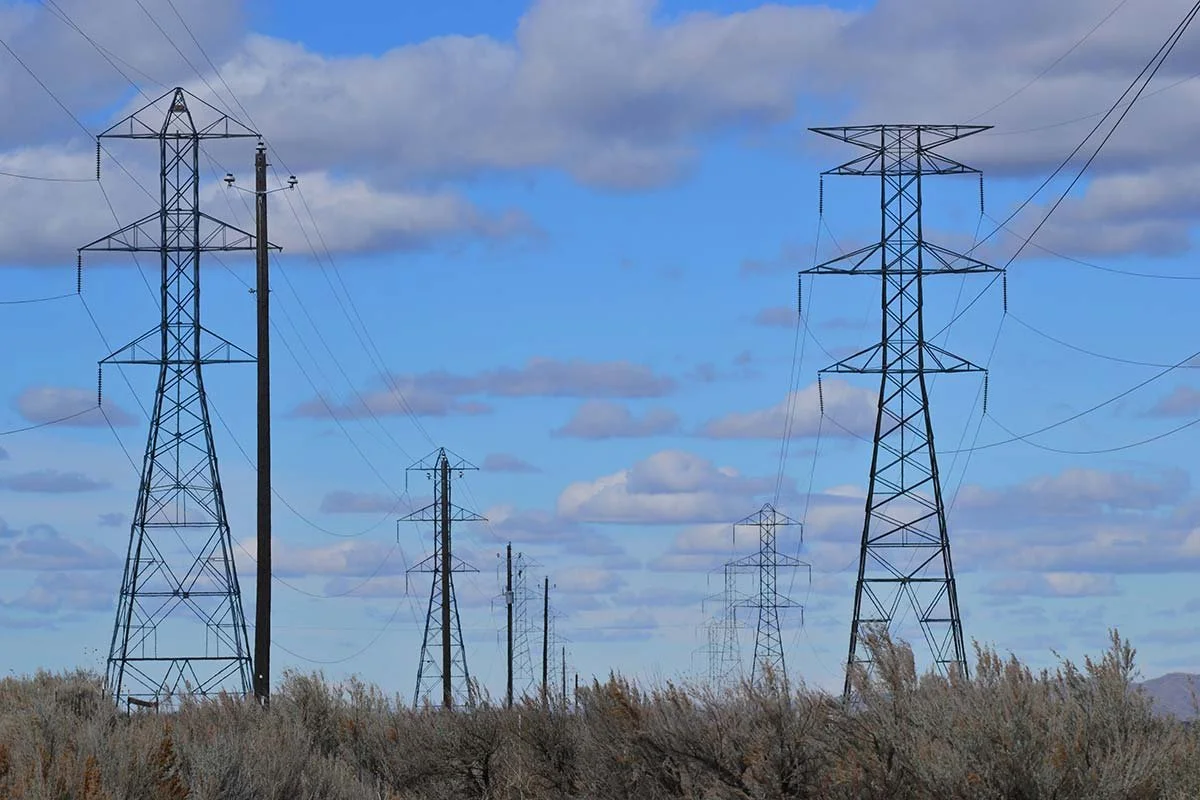
Power transmission is the most obvious example.
If you’re cutting a route for a line, the job isn’t confined to one flat stretch of land. The corridor may cross ranchland, pine timber, creek bottoms, and rocky draws in one run. That’s why power line right-of-way clearing is more like route management than ordinary site prep.
The Forest Service has a powerline operating plan document that also includes guidance on vegetation clearing, access planning, and hazard tree management for this kind of work.
Pipelines operate under the same principle. The line may end up underground, but the route still has to be reachable. PHMSA has guidance for operations and right-of-way maintenance.
You’ll also see utility right-of-way clearing tied to:
Substations and support access
Utility easements that need recurring vegetation control
Service roads that have to remain open for inspections and repairs
One thing this work is not is random brush clearing.
Crews have to build a path that other crews will depend on later.
The Importance of Keeping a Utility ROW Clearing Open
Without right-of-way maintenance, a corridor won’t last very long.
EPRI’s utility vegetation management guidance is somewhat of an industry standard because it connects how proper ROW maintenance equates to reliable power delivery, lower fire risk, and lower operations and maintenance costs.
5K Land Management follows the same vegetation management strategy after any utility right-of-way job by keeping tall-growing species out and managing lower vegetation to preserve access.
Right-of-Way Maintenance In Practice
A corridor might be cut through mixed timber. Construction crews move through and finish their part. Two growing seasons later, saplings are back, there are tons of brush around the main access points, and the visibility along a good portion of the route isn’t up to par.
No one with experience in utility right-of-way clearing looks at something like this as atypical. Regrowth is part of the lifecycle.
However, crews have to maintain that growth to spot encroachment and potential damage. If the corridor is closed in, that’s pretty much impossible.
So, the important things to think about with ROW maintenance are:
Access
Visibility
Fire exposure (especially where we work in Northern Texas and Southern Oklahoma)
Why Large Corridors Are Production Problems
A small clearing can make a property look neat and tidy. But a longer utility route demands something else entirely.
When there are miles of corridor to worry about, contractors have to think about sequencing and machine uptime. If one stretch is brush-heavy and the next requires equipment that can dig up a large tree, the contractor can’t stall every time the terrain changes. The job has to keep moving.
That’s why a lot of smaller operators get into trouble when it comes to large-scale utility right-of-way clearing. They may have the right equipment for one condition and not anything for the next. Or they’re able to clear a segment, but not support the follow-on access and recurring ROW maintenance work that the corridor actually needs.
Knowing the difference between creating access on a two-acre homesite and a multi-mile utility route is what separates a professional land clearing contractor from the other guys.
Selecting the Right Equipment for the Job
There are many types of right-of-way land clearing equipment that earn their keep, but they have to be paired to the task.
Mulchers
When the corridor is loaded with brush, saplings, or smaller woody growth, a mulcher is the best bet. That’s where you get production. On a longer, wider run, it’s even better to have equipment geared specifically to mulching for utility right-of-way clearing.
For example, Caterpillar’s D1 mulcher specifically calls out right-of-way construction and maintenance, noting its 72-inch cutting width per pass. Having equipment like that on a long run can speed up the process.
Dozers
Dozers have their place too. When the route needs heavier pushing, shaping, or rough access prep, they’re pretty hard to replace. We’ll often use dozers for heavier commercial land clearing work.
Excavators
When removing a tree or stump is the main goal, or eliminating deep root systems, excavators do the work. Big removals. Awkward ground. Places where a mulcher isn’t the right answer. Long-reach excavator configurations are great for ditches or waterways, and can help offset more complicated work.
Final Thoughts
A utility route has to work before construction, during construction, and long after the job turns over.
That’s why utility right-of-way clearing sits so close to the beginning of pipeline and powerline work. While this part of the process may not get the same attention as the infrastructure itself, it’s just as important. Without a cleared path, the rest of the job is impossible.
If you’re planning a utility project that’s in need of large-scale ROW clearing or maintenance, 5K Land Management can help. We work with utility contractors, developers, and landowners throughout Texas and Oklahoma.
Reach out to us or request a free consultation to learn more.