Key Takeaways:
Southeast Oklahoma land can change quickly, and land clearing companies need to be prepared for that.
Access is typically the first part of any rural land clearing job.
Hunting land often needs a lighter touch than a pasture or homesite, since the goal is opening trails and leaving important cover instead of clearing everything.
5K has an arsenal of in-house equipment and a crew of trained local operators to handle any job.
Land in Southeast Oklahoma can change a lot in a short drive. In Broken Bow, a wooded cabin tract may have downed limbs on a trail and wet ground that holds a lot of moisture after rain. Near Valliant or Wright City, a land clearing job may include opening an old timber road before big equipment can get through to the back.
5K Land Management works with rural Oklahoma property owners who need land opened up for hunting, grazing, building, resale, or basic upkeep. This guide walks through all the small variables that go into each job and how they can affect the way the clearing work gets planned in this part of Oklahoma.
Why Southeast Oklahoma Properties Need a Different Approach to Clearing
A job in Southeast Oklahoma doesn't feel the same as clearing a flat pasture west of I-35. Timber is a big part of that.
Pine and hardwood growth can crowd old private roads, cabin sites, hunting trails, and pasture edges. Underbrush fills in the gaps, and once that lower growth gets thick enough, you can't see any holes or washouts until you're almost on top of them.
A lot of the properties we work on need the first pass focused on access. That means opening up a lane. Getting to the backside. Clearing enough room to see what we’re working with. After that, the rest of the work is a lot easier.
Getting Into the Property Is Often the First Job
On bigger plots of land in Oklahoma, access can be a real issue. We’ve run into many landowners who have hundreds of acres but only use the front piece of their land because the old road out back is blocked. It doesn’t take much for this to happen. One fallen tree or creeping brush. Pretty soon, you can't even get through with a side-by-side.
Experienced Oklahoma land clearing contractors look at access before they start clearing random patches. The crew has to know how equipment will get in, turn around, and back out without tearing up more ground than necessary.
If timing is part of the decision, 5K’s guide on the best time of year to clear brush can help you think through the season and ground conditions for your property.
Dealing With Timber, Brush, and Storm Debris
Southeast Oklahoma gets its share of nasty weather, and you can see it in wooded land. When limbs come down and trees split, a trail that was open last fall can be totally blocked by spring.
Storm debris isn't always neatly lying in one place either. It gets tangled up in brush, hung up in smaller trees, or dropped across low sections where equipment needs to pass. Add vines, briars, and saplings, and a little cleanup can turn into a serious clearing job.
A brush clearing service can help when lower growth is what's keeping the land from being used the way it's intended. That might mean cutting back a trail or opening enough room around a gate to get equipment through. On some tracts, the bigger issue is visibility. Thick brush can hide old wire, broken posts, debris, ruts, and half-rotted limbs, so the crew may need to open the area enough to know what they’re dealing with.
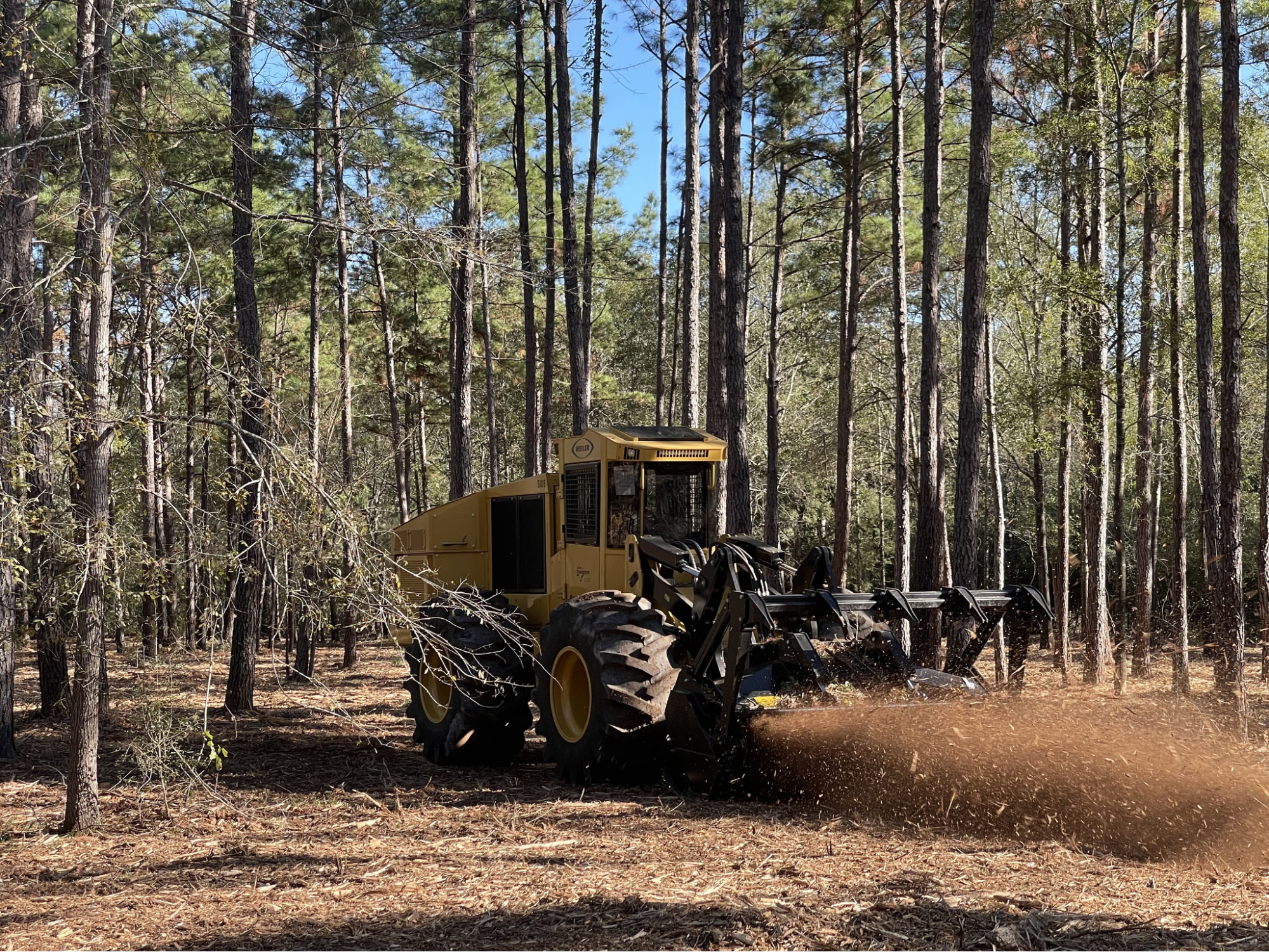
For timbered ground near Valliant or Wright City, mulching can be the right move. That's because a mulcher can cut through brush and smaller trees and leave that cleared material on the ground to protect the soil rather than piling it up along the road and needing to haul it out later.
Hunting Land Needs Careful Clearing
A lot of the land in Southeast Oklahoma is used for hunting, and when clearing hunting properties, there’s a special kind of judgment involved.
You don’t want every acre opened up the same way. A hunting tract typically needs trails, lanes, access to stands, and a way for animals to reach food plots or water. It also needs cover to give those animals a sense of security. It might make sense to cut a clean road through one section, but opening up every single thicket around it? Definitely not.
Forestry mulching is great for hunting land because it opens travel routes while leaving nearby cover.
Clearing Around the Edges of Pasture
The hardest work with most pastureland is around the edges. In Southeast Oklahoma, brush can build up quickly along fences, ponds, low-lying areas, and tree lines. If that brush is left to its own devices, it’ll eventually need heavy-duty equipment to clear.
Land clearing services can help push those edges back where they belong, making your fence lines and gates easier to get to and maintain.
On larger tracts, it usually makes sense to work in sections. Open the access first, clean up the roughest edges, then decide what needs attention the most.
Why Having an Experienced Crew Is Priceless
Rural Oklahoma clearing work can get expensive fast when you're working with the wrong equipment. With a small setup, you can spend all day fighting brush that a heavier machine can handle in an hour. The opposite can also be an issue. Big equipment in the wrong spot can leave ruts on soft ground. If it’s a tight-access job, you may not even be able to get large equipment through.
5K Land Management brings in-house equipment, trained operators, and an owner-led crew to each job, so you can work with one accountable team from start to finish.
Tell Us About Your Land
If you've got rural property in Southeast Oklahoma that needs access opened, brush cleared, or timbered ground brought back under control, let 5K Land Management take a look. We work with property owners in Watson, Valliant, Wright City, Thackerville, Broken Bow, Idabel, and other nearby communities.
Send us the details of your property, and we'll talk through the job.